CAE Simulations
CAE simulations represent a powerful tool that enables the analysis of the behaviour of products, structures, and processes through virtual modelling before their physical realisation. They help reduce the number of physical tests, accelerate development, lower costs, and replace testing in cases where it would be dangerous or difficult to perform. Simulations can also include human models, allowing the analysis of ergonomics, safety, and human interaction with equipment or structures.

Structural Simulations
Structural simulations show how structures and their components behave under various loads, such as impacts, vibrations, or temperature changes. They help identify weak points, increase durability, and reduce development and testing costs. They include linear analyses, such as determining stress and deformation of steel components under static loading, nonlinear problems involving large deformations or contact between parts, and dynamic analyses capturing vibrations, impacts, or crashes. LENAM also focuses on advanced studies in the field of fracture mechanics. A high-quality material model is the foundation of every reliable simulation. For all simulations, LENAM develops its own material models, which are thoroughly validated through numerous real-world applications.
MBS (Multi Body System) Simulations
MBS (Multi-Body System) simulations enable efficient modelling of the dynamic behaviour of systems composed of interconnected and moving bodies – in other words, various mechanical systems. This approach is used primarily in simulations of engines, gearboxes, and vehicle chassis, but also in robotic arms, production lines, and various machinery. These systems may include rigid bodies, flexible bodies, or their combination, allowing the simulation of deformations and stresses of individual parts and the assessment of their load-bearing capacity within the overall mechanism. LENAM has extensive experience in applying MBS simulations in gearbox design, where it is necessary to evaluate a large number of variants. To streamline this process, advanced machine learning methods are used.

CFD Simulations
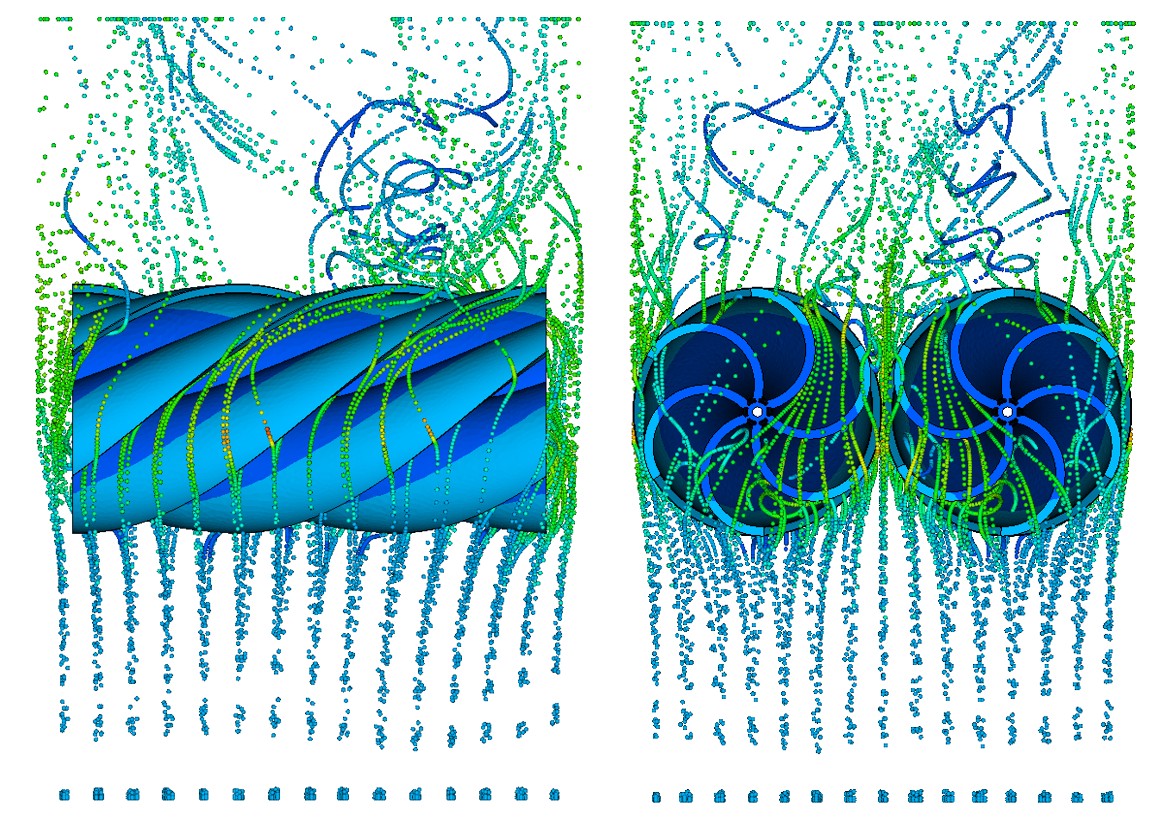
CFD simulations (Computational Fluid Dynamics) enable detailed analysis of fluid flow and heat transfer in a wide range of systems. LENAM uses these advanced calculations to solve even highly complex problems where flow, heat, and mechanical loading interact. Flow simulations cover a broad spectrum of applications – from the analysis of fluid flow in lubrication channels and piping systems to the design and optimisation of HVAC systems in buildings and rooms. They also allow the study of complex phenomena in turbomachinery, such as turbines and pumps, or the simulation of airflow around aircraft and air movement generated by drone or helicopter propellers. A key strength of LENAM is the expert use of open-source solutions, which are applied in cases where commercial software does not offer the required functionality. Thanks to a deep understanding of physical principles, LENAM is able to modify and adapt these tools to
Multiphysics Simulations
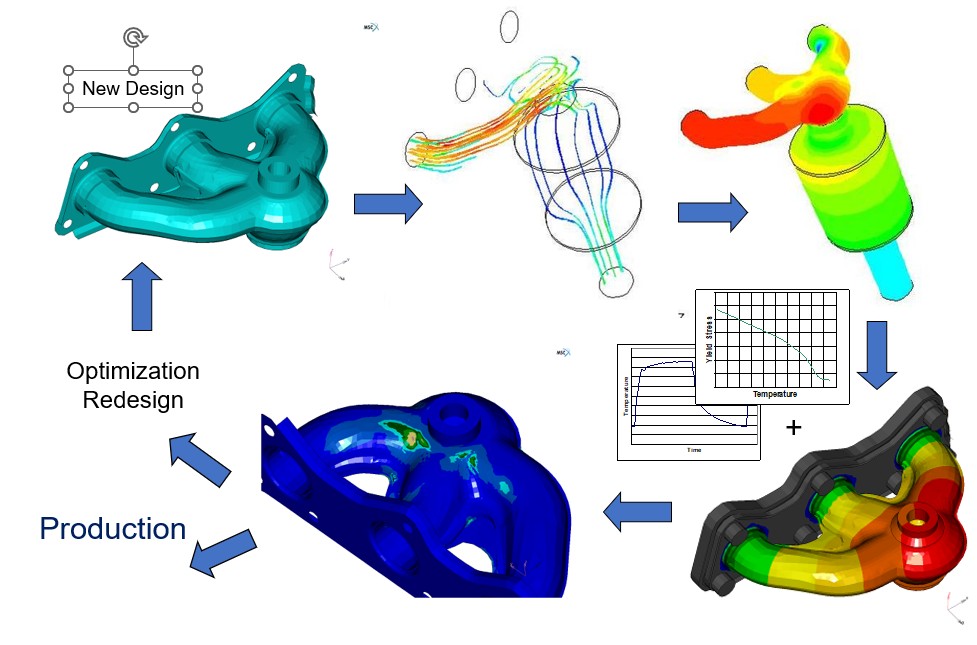
Multiphysics simulations represent a combination of different physical domains, such as mechanics, heat transfer, fluid flow, electromagnetism, or control logic. They enable a realistic description of systems in which these phenomena interact with each other. Examples include a vehicle driving through water with simultaneous loading and deformation of the bumper, bending and deformation of wind turbine blades due to flow and centrifugal forces, cooling of electronic components by airflow, thermo-mechanical loading of exhaust systems, or the interaction of a hydraulic system with its control logic. These simulations can be combined depending on the nature of the problem being addressed or according to specific customer requirements and needs.
Optimisation
Optimisation is one of the key areas of expertise at LENAM and focuses on improving the efficiency, strength, and functionality of individual components. It includes methods such as topology optimisation, which determines the optimal shape and material distribution, and parametric optimisation, where parameters such as material thickness or geometric dimensions are adjusted to achieve the best possible performance.
Examples include the optimisation of gear geometry for better load distribution and reduced noise, optimisation of composite structures to achieve an ideal balance between strength, stiffness, and weight, or the design of brackets and supports to ensure sufficient stiffness with minimal material consumption. Such optimisations help improve performance, service life, and production efficiency across a wide range of applications.
LENAM uses advanced optimisation methods based on the implementation of genetic algorithms, machine learning, and artificial intelligence, enabling efficient exploration of the design space and the identification of optimal solutions even for highly complex technical challenges.
Software:
The software used is always selected to best capture the physical nature of the problem being addressed while meeting the specific requirements and needs of the client.
![]() Structural simulation:
Structural simulation:
- ABAQUS
- PAMCRASH
- DYTRAN
- MSC.Nastran, MSC.Marc, Patran
- ANSYS, WORKBENCH
![]() MBS (multibody simulation)
MBS (multibody simulation)
-
Adams, Adams Car, Adams Real Time
-
Romax
![]() CFD and Acoustics
CFD and Acoustics
- ABAQUS
- PAMCRASH
- DYTRAN
- MSC.Nastran, MSC.Marc, Patran
- ANSYS, WORKBENCH
![]() Material Modeling
Material Modeling
-
Digimat
![]() Machine Learning and Artificial Intelligence
Machine Learning and Artificial Intelligence
-
ODYSSEE
-
TensorFlow, PyTorch
-
OpenAI
![]() CAD (design sw)
CAD (design sw)
-
ProEngineer, Catia, Solidworks
![]() Preprocesing a Postprocessing
Preprocesing a Postprocessing
-
ANSA, Meta
Contact
Are you looking for a reliable solution in the field of development support?
Contact us – we are experts in simulation and testing for maximum safety and compliance with technical standards!