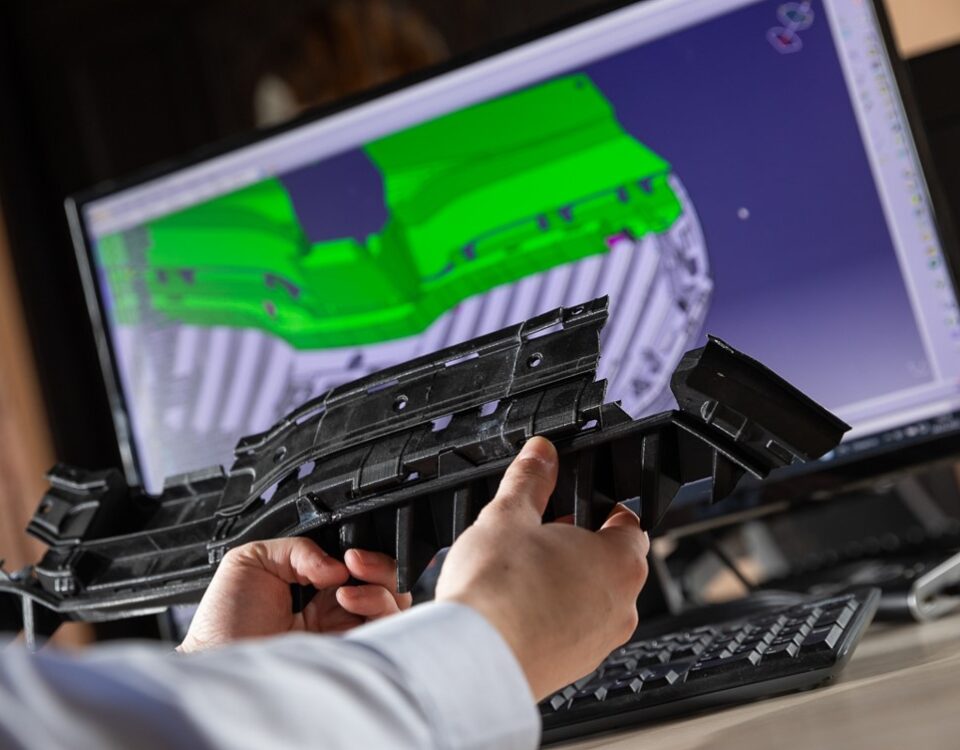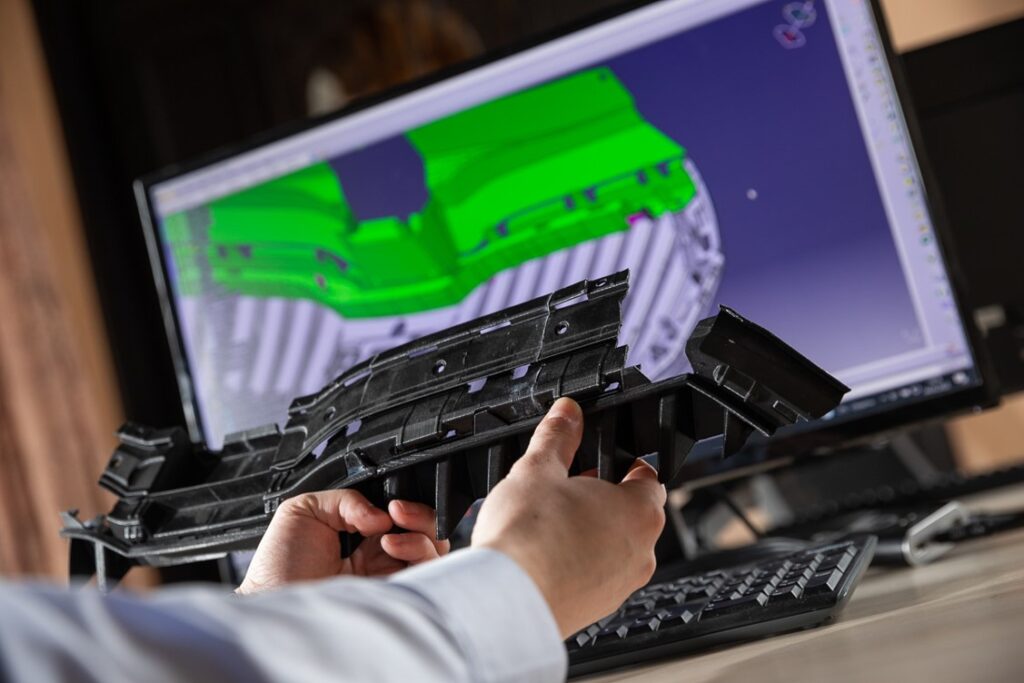
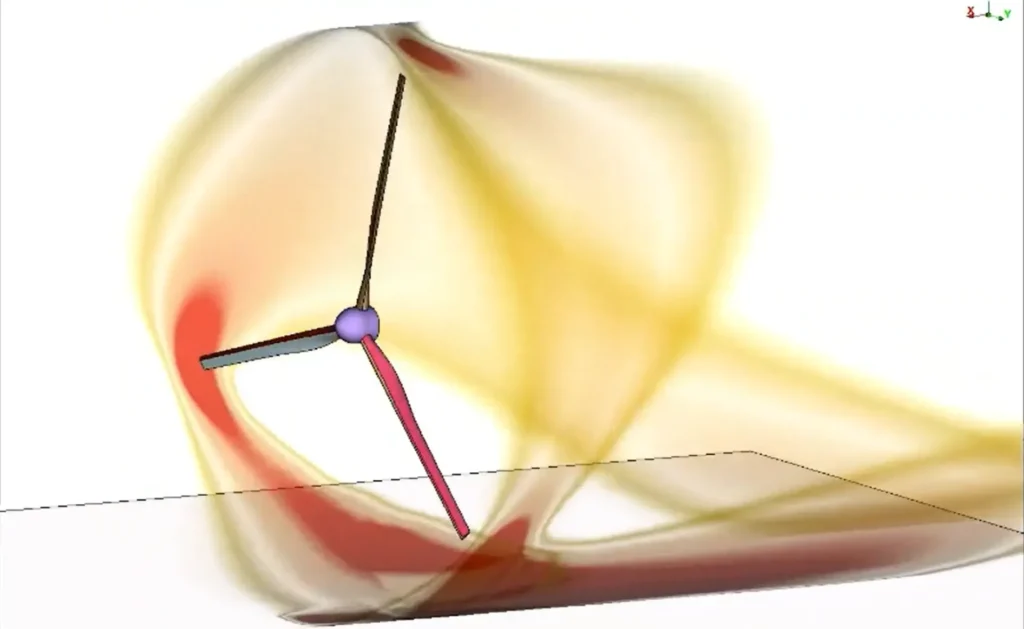
CFD simulations are now a key tool in modern development. At LENAM, they function as a virtual laboratory, enabling engineers to test and optimise designs before the first prototype is ever built. This significantly reduces the cost of physical testing while accelerating the entire development cycle.
CFD simulations analyse fluid flow and heat transfer
CFD (Computational Fluid Dynamics) is both a scientific discipline and an engineering tool that uses computer simulations and numerical methods to analyse and solve problems related to fluid flow and heat transfer. It allows detailed analysis of the behaviour of liquids and gases under various conditions and within different systems.
A major strength of LENAM lies in its combination of commercial and open-source tools, which are applied in cases where standard commercial software does not provide the required functionality. Thanks to a deep understanding of physical principles, LENAM engineers are able to adapt and customise these tools to solve highly specific tasks based on individual customer requirements. CFD simulations at LENAM cover a wide range of applications.
A long-term partner for the automotive industry
In the automotive industry, CFD simulations are used not only for analysing fluid flow in oil passages or piping systems, but also for more complex processes such as in-cylinder flow within engines. However, LENAM is not just a provider of simulations – it is a development partner for sustainable and safe vehicles. The company has been collaborating with Škoda Auto for over 30 years, and through its connection with AUREL, it has created a unique combination of simulation, virtual testing, and experimental validation.
Thermal management for batteries and buildings
One of today’s key challenges is thermal management, particularly for batteries and power electronics. LENAM focuses on optimising cooling systems – from airflow design to complex liquid cooling circuits. CFD simulations enable precise optimisation of heat exchanger performance and the design of optimal cooling concepts. LENAM engineers use advanced simulation models to monitor the thermal behaviour of batteries and optimise both cooling and heating processes. The goal is to maximise lifespan and safety, whether for electric vehicles, power electronics, or battery storage systems.
CFD simulations are also used to analyse airflow in buildings and residential spaces, including heat and cooling distribution within rooms. This makes it possible to design HVAC systems more effectively – optimising airflow, temperature distribution, and overall system performance to achieve maximum user comfort and energy efficiency.
Aeroacoustics: when airflow becomes audible
With the rise of quiet electric motors, aeroacoustics has come to the forefront. Noise generated by airflow often exceeds the noise of the powertrain itself. LENAM’s CFD simulations help identify sources of unwanted noise – for example, around side mirrors, A-pillars, fans, blowers, or structural details. Components can be designed from scratch and analysed long before production begins.
Passenger comfort under simulation
A specialised area includes simulations focused on human thermal comfort. LENAM uses advanced human thermoregulation models to evaluate how the body responds to airflow and temperature conditions. This allows prediction of how different user groups – such as passengers in buses or aircraft – will perceive the environment and enables HVAC settings to be adjusted to suit the widest possible range of users.
CFD simulations are also widely applied in turbomachinery, such as turbines and pumps. In these systems, they help analyse complex interactions between flow, heat transfer, and mechanical stress, contributing to higher efficiency and reliability.
The future of CFD: new methods and smarter computation
Looking ahead, further development is expected, particularly in linking simulations with real-world operation and machine learning methods. These can accelerate repetitive calculations, although the design of new concepts remains firmly within the domain of engineering know-how. Promising new computational methods are also emerging, such as particle-based approaches (Smooth Particle Hydrodynamics), which eliminate the need for mesh generation and can significantly simplify and speed up simulations.
CFD is no longer just about airflow. It is a comprehensive tool that combines physics, computation, and engineering expertise into a digital laboratory – ready to tackle even the most demanding development challenges.
Do you know how CFD simulations can optimise your development process? Contact LENAM and move your projects forward from the very first design –faster, more accurately, and at lower cost.